


Your feet are covered most of the day. If you're diabetic, periodic screening is important for good health. Numbness is often a sign of diabetic foot and can mask a sore or wound.
Alvin (281) 331-3525

Diplomat, American Board of Podiatric Surgery Fellow, American College of Foot and Ankle Surgeon
Your feet are covered most of the day. If you're diabetic, periodic screening is important for good health. Numbness is often a sign of diabetic foot and can mask a sore or wound.
 People who enjoy running and jogging are most likely aware of the complications that can arise from having poor circulation. It may hinder their ability to reach specific goals, which may cause frustration in practicing their chosen sport. Additionally, it can be indicative of health issues, which is why it is so important to be aware of the possible symptoms. These can include numbness, tingling, or foot pain. The feet may feel cold, and appear swollen as well. A common reason why poor circulation may develop can come from peripheral artery disease, which is referred to as PAD. The factors that may lead to this illness can consist of smoking, pregnancy, and heart conditions. Poor circulation may occur in patients who are obese, or who are afflicted with medical conditions that can include diabetes and Raynaud’s disease. Some patients find mild relief when compression stockings are worn, as well as taking up a gentle exercise program. If you are experiencing any of the symptoms that are associated with poor circulation, it is recommended that you consult with a podiatrist who can determine the best treatment options for you.
While poor circulation itself isn’t a condition; it is a symptom of another underlying health condition you may have. If you have any concerns with poor circulation in your feet contact Dr. Douglas Webb of Texas. Our doctor will treat your foot and ankle needs.
Poor Circulation in the Feet
Peripheral artery disease (PAD) can potentially lead to poor circulation in the lower extremities. PAD is a condition that causes the blood vessels and arteries to narrow. In a linked condition called atherosclerosis, the arteries stiffen up due to a buildup of plaque in the arteries and blood vessels. These two conditions can cause a decrease in the amount of blood that flows to your extremities, therefore resulting in pain.
Symptoms
Some of the most common symptoms of poor circulation are:
Treatment for poor circulation often depends on the underlying condition that causes it. Methods for treatment may include insulin for diabetes, special exercise programs, surgery for varicose veins, or compression socks for swollen legs.
As always, see a podiatrist as he or she will assist in finding a regimen that suits you. A podiatrist can also prescribe you any needed medication.
If you have any questions, please feel free to contact our office located in Alvin, TX . We offer the newest diagnostic and treatment technologies for all your foot care needs.
 The medical term that is known as onychomycosis is commonly referred to as toenail fungus. It can happen to any part of the toenail, and the frequency of this occurrence may increase with age. A common symptom associated with this type of fungus that may occur is a white or yellow discoloration of the nail. Another system that may arise is the nail becoming thick or brittle, and possibly crumbling. In severe cases, the entire nail may disintegrate, and can look unsightly. This condition is caused by a fungus that lives and thrives in warm and moist environments. These places can consist of public swimming pools, shower room floors, and locker rooms. It is considered to be contagious, so it is beneficial to wear appropriate shoes while in these areas. There are several treatment techniques that may be available, so it is strongly suggested to consult with a podiatrist who can determine the best option for you.
If left untreated, toenail fungus may spread to other toenails, skin, or even fingernails. If you suspect you have toenail fungus it is important to seek treatment right away. For more information about treatment, contact Dr. Douglas Webb of Texas. Our doctor can provide the care you need to keep you pain-free and on your feet.
Symptoms
Treatment
If self-care strategies and over-the-counter medications does not help your fungus, your podiatrist may give you a prescription drug instead. Even if you find relief from your toenail fungus symptoms, you may experience a repeat infection in the future.
Prevention
In order to prevent getting toenail fungus in the future, you should always make sure to wash your feet with soap and water. After washing, it is important to dry your feet thoroughly especially in between the toes. When trimming your toenails, be sure to trim straight across instead of in a rounded shape. It is crucial not to cover up discolored nails with nail polish because that will prevent your nail from being able to “breathe”.
In some cases, surgical procedure may be needed to remove the toenail fungus. Consult with your podiatrist about the best treatment options for your case of toenail fungus.
If you have any questions please contact our office located in Alvin, TX . We offer the newest diagnostic and treatment technologies for all your foot and ankle needs.
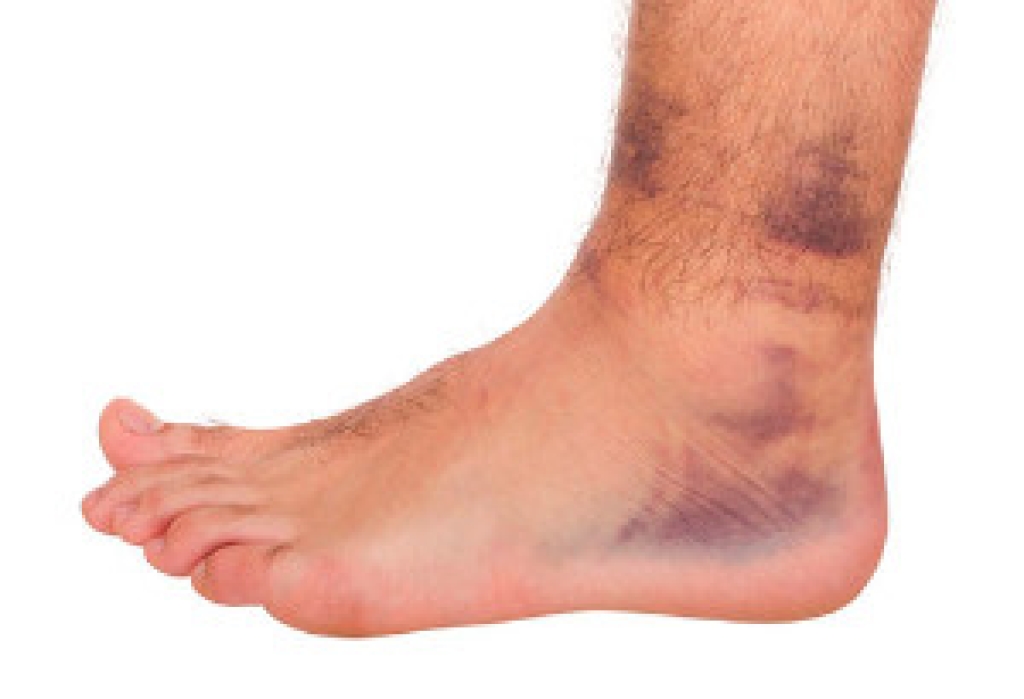
Research has indicated the chances of a full recovery from an ankle sprain may be increased when an aggressive role in healing is practiced after the injury occurs. This may include initially wrapping the affected ankle in an elastic bandage followed by performing gentle stretching techniques when the ankle begins to feel better. These practices may help the ankle to heal faster which can be beneficial in resuming any sporting activity. There are known to be three types of ankle sprains. Light sprains will generally heal in approximately three weeks. If the ligaments are severely stretched, recovery may last between four and six weeks. Torn ligaments are referred to as a serious ankle sprain, and the healing process can take up to three months. If you have endured an ankle sprain, it is advised that you speak to a podiatrist who can properly treat this condition.
Ankle sprains are common but need immediate attention. If you need your feet checked, contact Dr. Douglas Webb from Texas. Our doctor can provide the care you need to keep you pain-free and on your feet.
How Does an Ankle Sprain Occur?
Ankle sprains take place when the ligaments in your ankle are torn or stretched beyond their limits. There are multiple ways that the ankle can become injured, including twisting or rolling over onto your ankle, putting undue stress on it, or causing trauma to the ankle itself.
What Are the Symptoms?
Preventing a Sprain
Treatment of a Sprain
Treatment of a sprain depends on the severity. Many times, people are told to rest and remain off their feet completely, while others are given an air cast. If the sprain is very severe, surgery may be required.
If you have suffered an ankle sprain previously, you may want to consider additional support such as a brace and regular exercises to strengthen the ankle.
If you have any questions please feel free to contact our office located in Alvin, TX . We offer the newest diagnostic tools and technology to treat your foot and ankle needs.

You don't need an excuse to have beautiful nails. Step outside without worrying about the appearance of your feet.
We are sad to announce that we have closed our Webster location and combined it with our Alvin office, located at 1 Medic Lane Alvin, TX 77511.
Thank you so much for your understanding.
- Dr. Webb and Staff